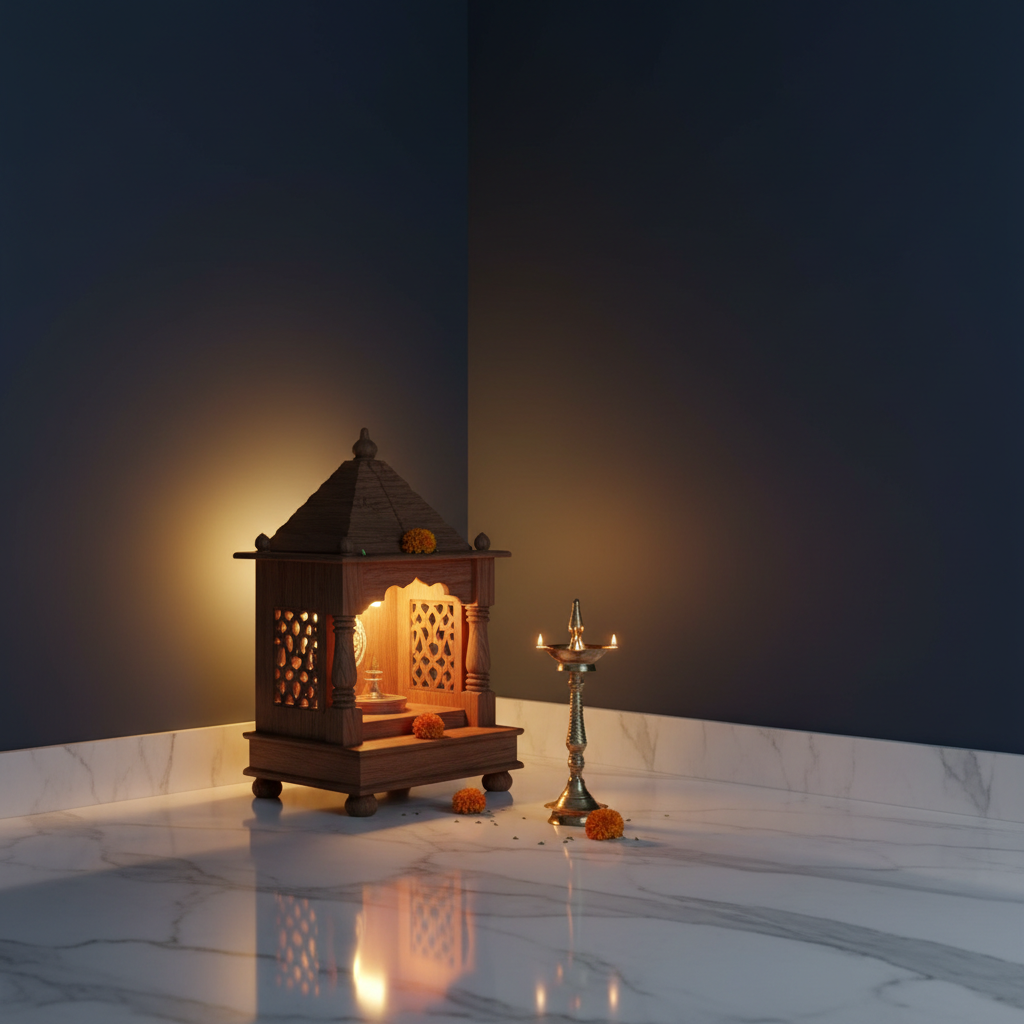
Creating a sacred space is essential for spiritual growth and mental peace. Designing a pooja room as per vastu ensures that your home resonates with high-frequency vibrations, attracting prosperity and health. The Northeast corner, also known as the Ishanya zone, is considered the most auspicious spot for prayer as it is the meeting point of positive solar energy and magnetic forces.
Ideal Direction for a Pooja Room as per Vastu
The primary rule of Vastu Shastra is to place the prayer area in the Northeast (Ishanya). If this is not possible due to structural constraints, the East and North directions are the next best alternatives. These directions are associated with the rising sun and the flow of fresh, creative energy.
- Northeast: Best for overall spiritual growth and clarity.
- East: Ideal for those seeking social status and recognition.
- North: Suitable for attracting wealth and career opportunities.
- Avoid: Never place a pooja room in the South or Southwest, as these zones are governed by heavy, grounding energies not suitable for prayer.
Correct Idol Direction and Placement
How you place the deities is just as important as where the room is located. When praying, you should ideally face the East or North. Therefore, the idols should be placed such that they face West or South. Ensure the idols are not kept directly against the wall; maintain a gap of at least one inch to allow for energy circulation.
In traditional Indian temple architecture, such as the famous Brihadeeswarar Temple, the 'Garbhagriha' (sanctum sanctorum) is designed to maximize cosmic resonance. While home mandirs are smaller, following the rule of keeping idols at heart level—never on the floor—honors this ancient architectural wisdom.
Vastu Approved Colours and Lighting
The psychological impact of color is a core pillar of Vastu. For a pooja room, choose colors that reflect light and promote tranquility. Avoid dark, aggressive shades like black or dark grey, which can dampen the meditative atmosphere.
- White or Cream: Symbolizes purity and peace.
- Light Yellow: Represents knowledge and spiritual awakening.
- Light Blue: Creates a calm, expansive feeling like the sky.
- Lighting: Use warm LED lights or traditional brass lamps. Ensure the space is well-lit, especially during sunrise and sunset, to signify the removal of darkness.
Essential Dos and Don'ts
To keep the energy of your pooja room pure, follow these simple maintenance tips. The space should always be clutter-free, and you should avoid storing anything under the mandir. If your pooja unit is in the kitchen, ensure it has a curtain or a glass door to maintain its sanctity during cooking.
Unsure if your current prayer space aligns with these cosmic principles? Use the Vastu Scanner AI app to instantly check your home's alignment. Simply scan your pooja room to receive personalized corrections and ensure your home remains a sanctuary of peace.