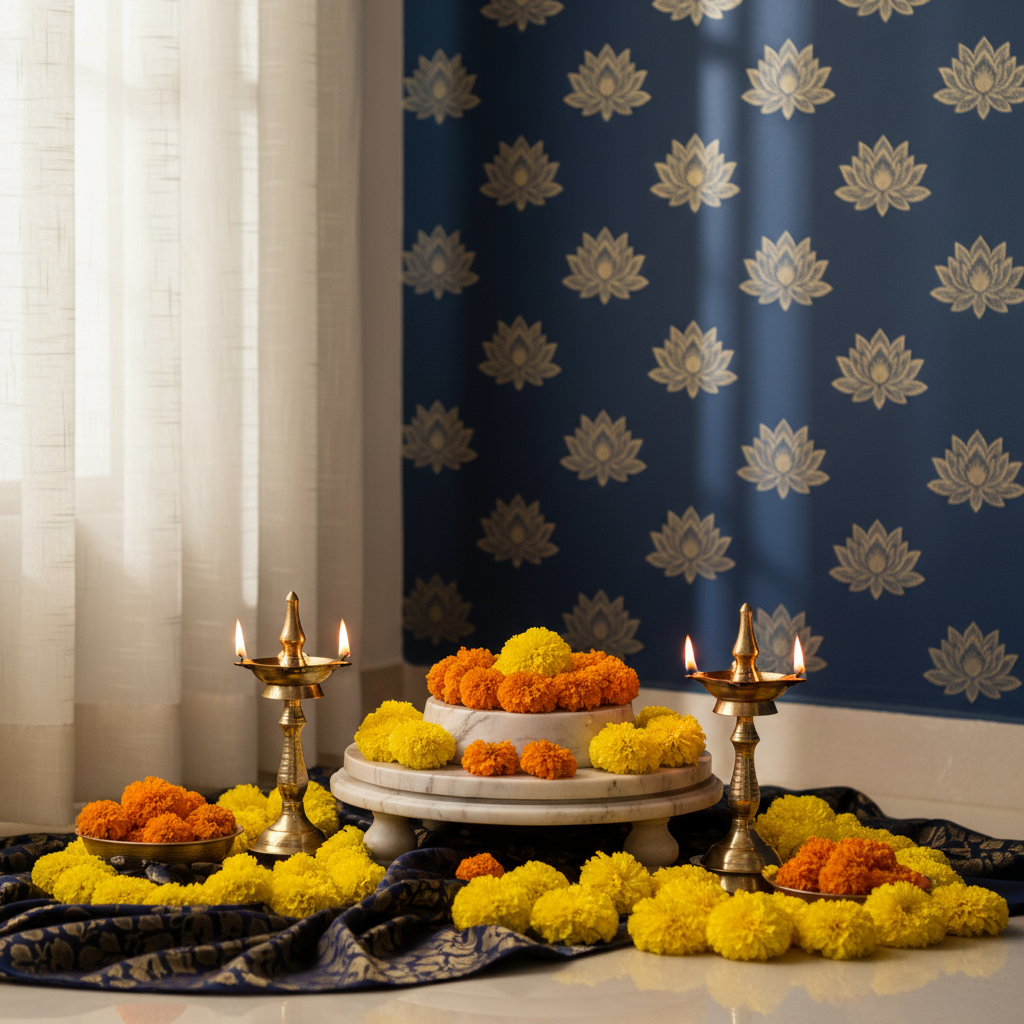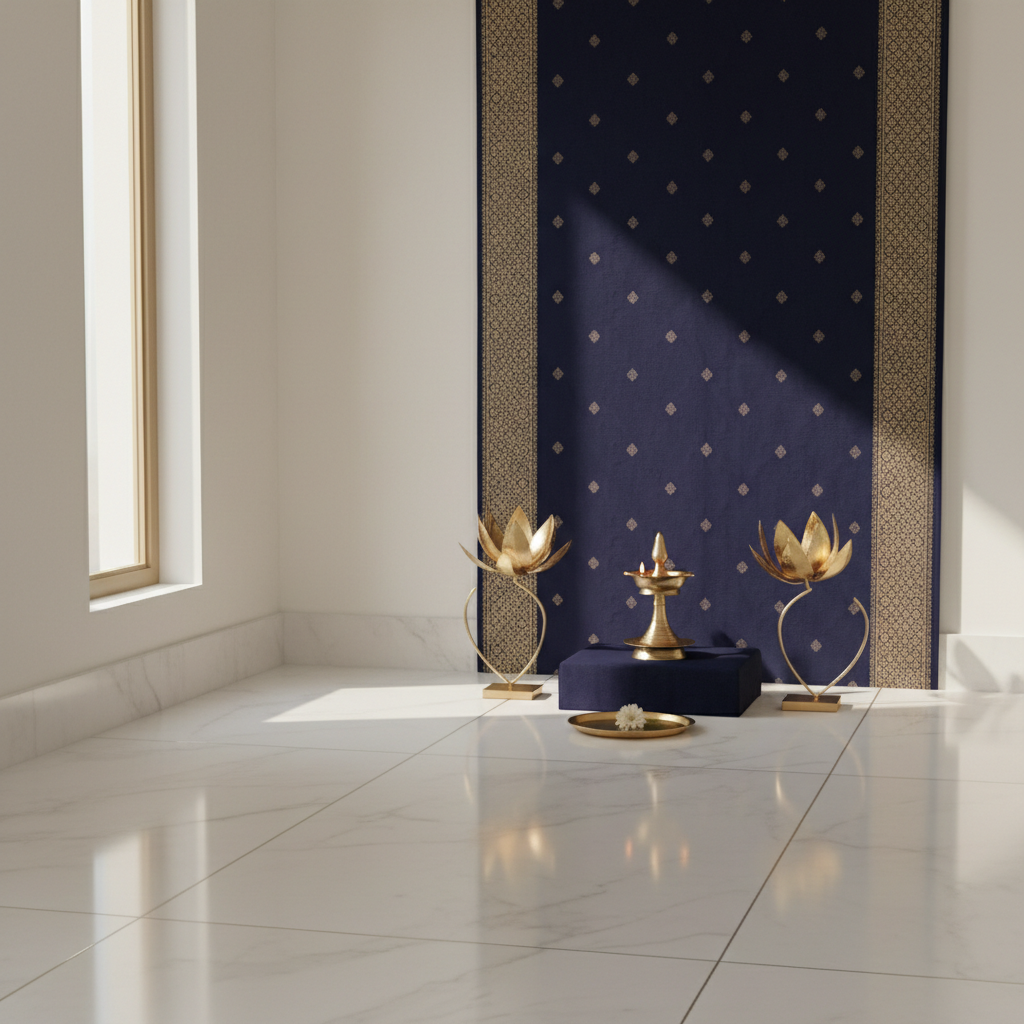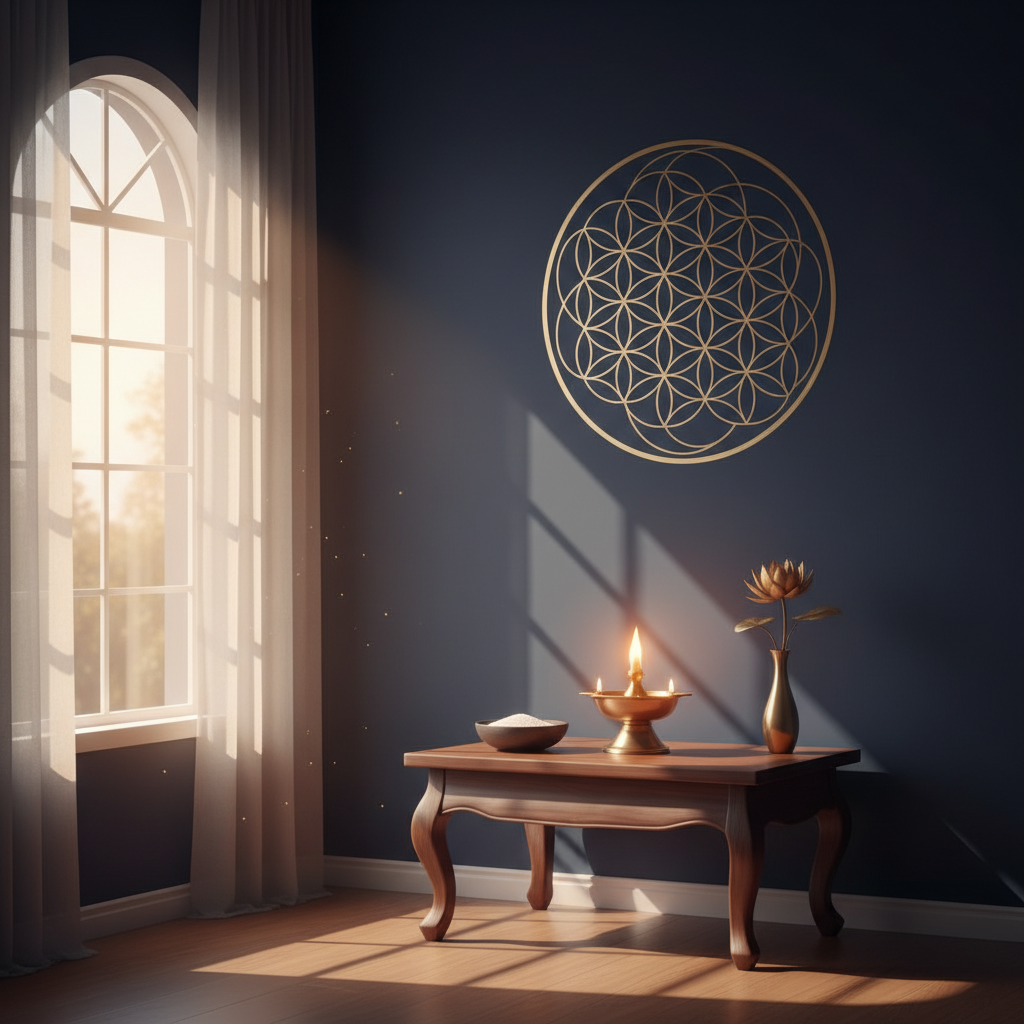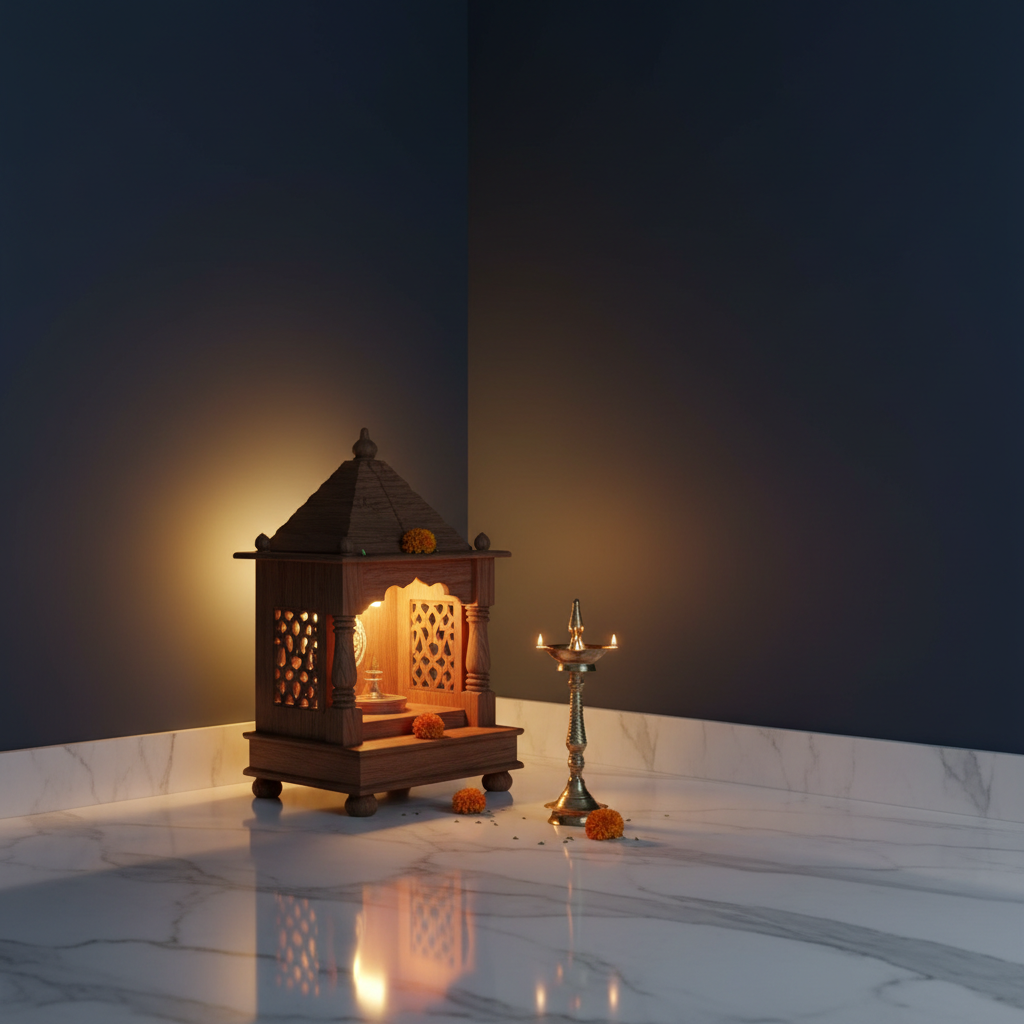
The pooja room is the spiritual heart of your home. In Vastu Shastra, its direction, the placement of idols, and even the way you sit while praying influence the flow of positive energy. This guide covers the essentials so you can set up (or correct) your mandir with confidence.
The best direction for a pooja room
The north-east corner (Ishaan kona) is the most auspicious location for a pooja room. This zone is governed by Jupiter and considered the seat of divine energy, making it ideal for meditation, prayer, and spiritual growth.
- North-east: the most sacred and preferred direction.
- East: a strong second choice, aligned with the rising sun.
- North: acceptable, especially in apartments where north-east is unavailable.
- Avoid: south, south-west, and rooms under a staircase or toilet.
Which direction should you face while praying?
Sit facing east or north while praying. The idols should be placed so that you face the deity — this means the idols themselves face west or south. Facing south during prayer is generally avoided.
Idol placement rules
- Place idols at least an inch away from the wall so air can circulate around them.
- Idols should not face each other, and broken or chipped idols should be respectfully removed.
- Keep idols at chest height when seated — not on the floor, not towering above your head.
- Do not keep photos of deceased ancestors in the same mandir as deities; give them a separate space, ideally on a south wall.
- Two Shivlings, three Ganesha idols, or two Shankha (conch shells) in the same mandir are traditionally avoided.
Design and material tips
- Use light colours like white, cream, light yellow, or sandalwood for the walls of the pooja room.
- Wood is the preferred material for the mandir — teak, sheesham, or sandalwood are traditional choices.
- Doors should ideally have two shutters and open outward, with a small threshold at the base.
- Keep the room well-ventilated with a window or opening in the east or north.
Common Pooja room Vastu doshas and remedies
- Pooja room in the bedroom: cover the mandir with a curtain when not in use; avoid placing it directly facing the bed.
- Pooja room under a staircase: shift if possible; otherwise place a small pyramid above the mandir and keep the area brightly lit.
- Pooja room next to a toilet or kitchen: use a solid partition, and keep the shared wall clean and free of clutter.
- South-facing mandir: place a Vastu pyramid or a small copper Sri Yantra to balance the energy.
- Clutter or storage inside the mandir: remove old items, unused lamps, and paperwork — the mandir should hold only worship essentials.
Daily habits that strengthen pooja room energy
- Light a diya or incense every morning and evening to keep the space energetically active.
- Clean the mandir daily with a soft cloth; wash idols weekly.
- Avoid leaving fresh flowers or prasad overnight — offer, then remove.
- Keep a small copper or brass water pot (kalash) in the north-east of the mandir.
Not sure whether your current pooja room direction is correct? Open Vastu Scanner AI, point your camera at the mandir, and the app will confirm the direction and flag any doshas with tailored remedies — no guesswork needed.